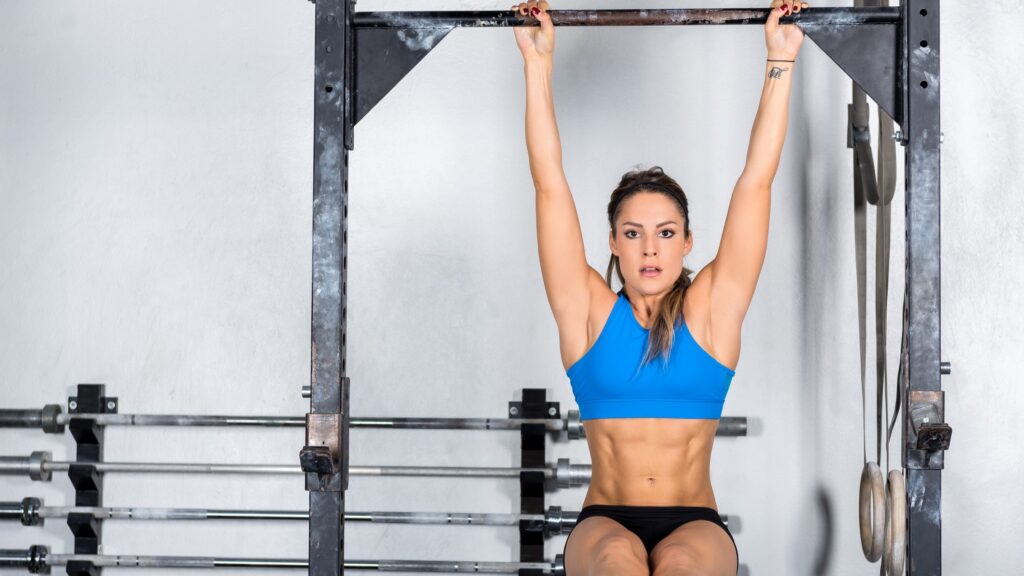
Hanging exercises, like dead hangs and leg raises, are great for core strength and longevity by improving grip strength (a key health marker), decompressing the spine, boosting posture, and building overall stability, which helps you maintain functional independence and reduces injury risk as you age, supporting long-term health and vitality.
They work the entire upper body and core isometrically and dynamically, fighting the effects of sedentary lifestyles. To safely perform hanging leg raises, focus on controlled movement and engaging your abdominal muscles to tilt your pelvis, rather than just lifting your legs with your hip flexors.
Core Strength & Stability
- Engages Deep Core: Hanging leg raises, in particular, intensely target your lower abs, obliques, and hip flexors for defined abs and better control, while even a passive dead hang engages your core to keep you stable.
- Combats Sedentary Issues: It counteracts rounded shoulders and forward head posture (tech neck) from sitting, restoring natural movement and core engagement.
Longevity & Overall Health
- Grip Strength: A strong grip is a powerful predictor of overall health, muscle mass, and longevity, linked to lower risks of chronic diseases and premature death.
- Spinal Decompression: Gravity gently lengthens the spine, reducing compression on discs and relieving back tension, which is great for joint health.
- Shoulder Mobility & Joint Health: Hanging helps restore natural range of motion in the shoulders and creates space in the joint capsule, improving joint health.
- Functional Independence: Strong grip, core, and upper body strength from hanging helps with everyday tasks (lifting, carrying) and allows you to stay independent longer.
How it Works
- Dead Hangs (Passive): Holding on with straight arms activates muscles to stabilize, improving endurance and connective tissue strength.
- Hanging Leg Raises (Active): Lifting your legs while hanging provides progressive overload for your abs and deep stabilizers, challenging them more than floor exercises.
- Progress gradually: Hanging leg raises are an advanced exercise. If you are a beginner, start with floor leg raises or hanging knee raises to build the necessary strength and stability.
- Listen to your body: If you experience any pain, particularly in your lower back or shoulders, stop the exercise and consider a modification.