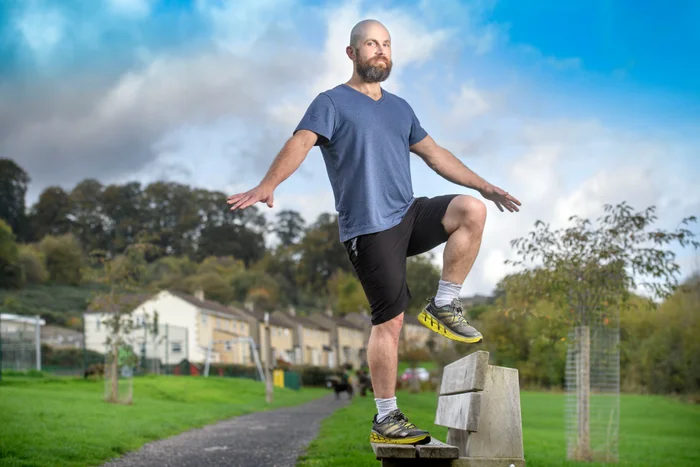
Standing on one leg offers significant fitness and longevity benefits by improving balance, strength, and neurological health, and is a strong predictor of overall well-being as we age.
Fitness Benefits
Regular practice of single-leg stands engages the body’s musculoskeletal and neurological systems, translating to improved daily function and physical performance.
- Improved Balance and Stability The primary benefit is enhanced stability, which is crucial for everyday movements like walking, climbing stairs, and stepping over obstacles. Training this skill helps the body’s systems (vision, inner ear, and sensory receptors) work together more efficiently.
- Stronger Muscles and Core Balancing on one leg forces numerous muscle groups to engage for stability, including the core (abdominals and back muscles), glutes, hamstrings, quadriceps, and ankle stabilizers. This strengthens these muscles and helps correct strength imbalances between limbs.
- Reduced Risk of Falls and Injuries Falls are a leading cause of injury for older adults. By improving balance and coordination, the single-leg stance exercise helps prevent falls and related injuries like fractures, which in turn helps maintain independence and mobility later in life.
- Enhanced Joint Health This exercise places demands on joints in the ankles, knees, and hips, which can help maintain their flexibility and stability over time. Stronger supporting muscles act as “scaffolding” to protect the joints.
- Better Posture Maintaining balance on one leg requires proper spinal alignment and core engagement, which promotes better posture and can help alleviate chronic lower back pain.
- Cognitive Function The brain is actively involved in maintaining balance. Single-leg stands require concentration and stimulate the cerebellum, the part of the brain responsible for coordination and movement. This continuous feedback loop can enhance memory, attention, and neuroplasticity, potentially delaying cognitive decline.
Longevity Benefits
Beyond immediate fitness gains, the ability to perform a single-leg stand is considered one of the best physical indicators of healthy aging and a predictor of longevity.
- Predictor of All-Cause Mortality A widely reported 2022 study in the British Journal of Sports Medicine found that individuals aged 51-75 who were unable to stand on one leg for at least 10 seconds had an 84% higher risk of death from any cause within a seven-year follow-up period, compared to those who could.
- Indicator of Overall Health The ability to balance reflects how the body’s various systems (neuromuscular, cardiovascular, and sensory) are working in concert. Difficulty balancing can be an early sign of underlying health conditions such as brain or nervous system issues, including stroke, dementia, or Parkinson’s disease, highlighting its value as a simple screening tool.
- Maintained Independence By reducing the risk of falls and improving mobility and strength, good balance helps individuals maintain their functional independence, a key factor in a high quality of life and healthy aging.
How to Practice
The exercise requires no special equipment and can be easily incorporated into daily life.
- Start with Support Stand near a wall or a sturdy chair for support.
- Lift One Leg Slowly lift one foot off the ground, keeping your arms at your sides, and try to hold the position for as long as comfortable.
- Set a Goal Work towards holding the pose for 30 seconds on each leg.
- Make it Routine Practice while brushing your teeth, waiting for the kettle to boil, or during TV commercial breaks.
Consistency is key, as balance can be trained and improved throughout life, even into older age. If you have concerns about your balance, consult with a healthcare professional or physical therapist.