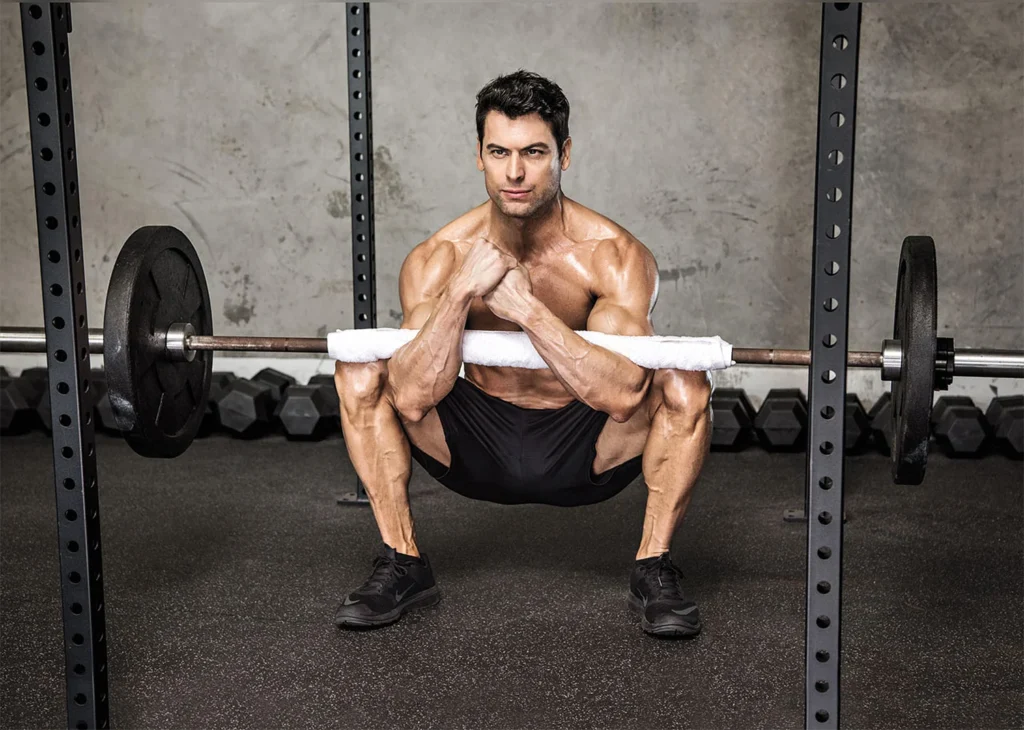
Zercher squats (holding the bar in the elbow crooks) offer superior core, thoracic spine, and upper-back engagement compared to back squats, making them better for upright posture and functional strength. They are generally more joint-friendly for the lower back and shoulders, aiding longevity, while back squats excel at building absolute maximal leg load. Zercher squats act as a “joint-friendly” alternative to back squats, mitigating risks to the knees and lower back while ensuring consistent core and upper back strengthening to protect the spine during daily activities.
Health, Fitness, and Longevity Benefits of Zercher Squats
- Superior Core Engagement: The front-loaded nature forces the abdominal muscles, obliques, and spinal erectors to work intensely to maintain an upright posture, leading to improved, deep abdominal bracing.
- Reduced Spinal Compression: Zercher squats typically put less pressure on the lower spine than back squats, making them an excellent alternative for those with back issues.
- Enhanced Posture & Upper Back: By forcing you to maintain an upright torso, it strengthens the upper back and prevents the forward-lean common in weak lifters.
- Functional Real-World Strength: The movement mimics lifting, carrying, and holding awkward, heavy objects in the elbow crooks, translating to better “real-world” strength and longevity.
- Upper-Body Involvement: Unlike back squats, the Zercher engages the biceps, lats, and upper back to keep the bar secure.
- Accessibility: It requires less shoulder and wrist mobility than back squats.
Key Strength Benefits:
- Intense Core & Back Strength: The forward loading forces the rectus abdominis, obliques, and erector spinae to work significantly harder, strengthening the trunk against rotational and lateral forces. It also targets the upper back, including the traps, rhomboids, and rear delts.
- Maximum Quad Activation: Because the weight is forward, it reduces the load on the lower back and forces the quads to work harder, making it a very quad-dominant exercise.
- Improved Posture & Spinal Health: It forces an upright torso, correcting forward leaning, and is often preferred by those with lower back issues because it reduces direct compressive forces on the spine.
- Functional Strength & Carryover: This lift is directly applicable to real-world tasks that involve lifting heavy objects (similar to Strongman training), and acts as an excellent “dead-stop” builder for raw strength.
- Improved Squat Depth: The forward weight acts as a counterbalance, allowing many users to achieve a deeper, more comfortable squat.