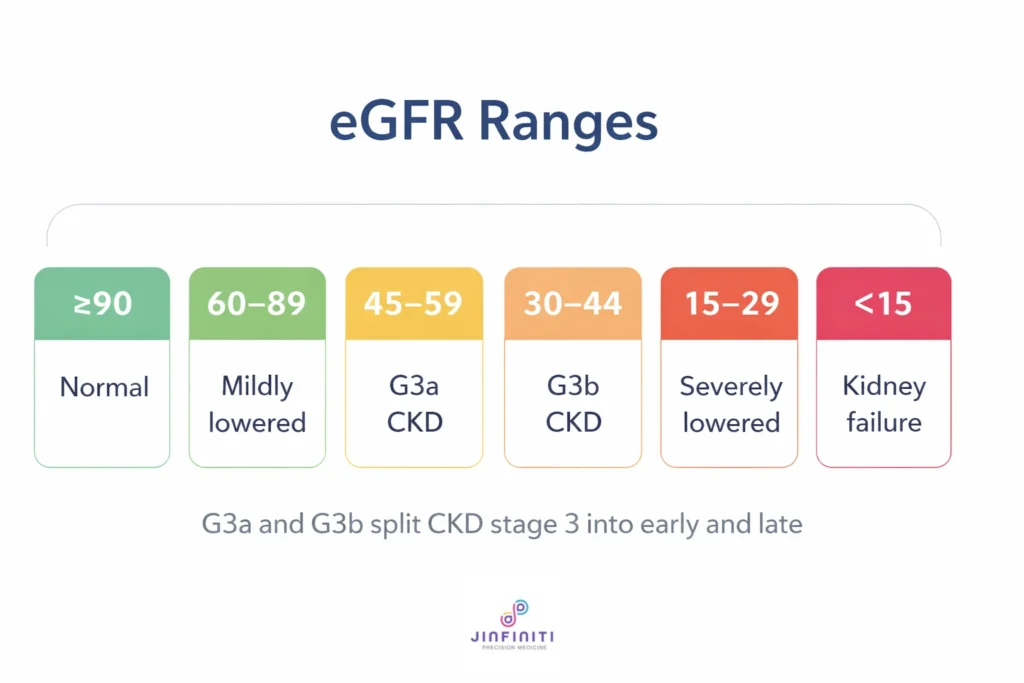
Knowing your estimated glomerular filtration rate (eGFR)—a number indicating how well your kidneys filter blood—is crucial for early detection of kidney disease, which often shows no symptoms until advanced stages. Because kidney damage is generally irreversible, knowing this score allows for proactive lifestyle changes and treatments that can slow or stop the progression to kidney failure, directly impacting long-term health and survival.
Why You Should Know Your eGFR
- Silent Nature of Kidney Disease: Roughly 37 million U.S. adults may have Chronic Kidney Disease (CKD), yet nearly 90% are unaware of it because symptoms (like fatigue, swelling, or nausea) usually appear only in later stages.
- Early Intervention: An eGFR test can detect kidney issues early. Catching a decline at stage 1 or 2 allows you to implement protective habits before significant, irreversible damage occurs.
- Monitoring Health Trends: A single eGFR reading is less important than the trend over time. Knowing your numbers enables you to track whether your kidney function is stable, decreasing slowly, or falling rapidly.
- Identifying Risk Factors: If you have diabetes, hypertension, a family history of kidney disease, or are over 50, you are at higher risk, making regular eGFR monitoring essential to prevent severe complications.
Importance to Health and Longevity
- Preventing Kidney Failure: An eGFR below 60 for three months or more indicates CKD, while a score below 15 suggests kidney failure, requiring dialysis or a transplant. Early awareness helps avoid these outcomes.
- Cardiovascular Protection: Your kidneys and heart are deeply connected. A low eGFR (below 60) is a risk factor for cardiovascular disease, as damaged kidneys struggle to manage fluid, increase blood pressure, and cause toxic buildup that damages vessels.
- Improved Medication Management: Doctors use your eGFR to calculate the correct dosage for many medications, preventing kidney damage from drug toxicity.
- Maintaining Vitality and Function: By keeping your kidneys healthy through monitoring and lifestyle, you prevent complications like anemia, bone disease, and electrolyte imbalances that negatively affect longevity.
What Your Score Means (mL/min/1.73 m²)
- 90 or higher: Normal or high function.
- 60–89: Mildly decreased function (early-stage kidney disease possible).
- 15–59: Kidney disease (moderate to severe).
- Below 15: Kidney failure.
Steps to Take Based on Your Score
If your eGFR is below 60 for three months or more, you should see a nephrologist. To protect your kidney function:
- Control Blood Pressure and Sugar: High blood pressure and diabetes are the leading causes of kidney disease.
- Manage Diet: Limit sodium (salt) and excessive animal protein.
- Stay Hydrated: Proper fluid intake helps kidneys function without straining.
- Avoid Overuse of NSAIDs: Avoid non-steroidal anti-inflammatory drugs like ibuprofen and naproxen, which can cause kidney damage.
- Stop Smoking: Smoking reduces blood flow to the kidneys.