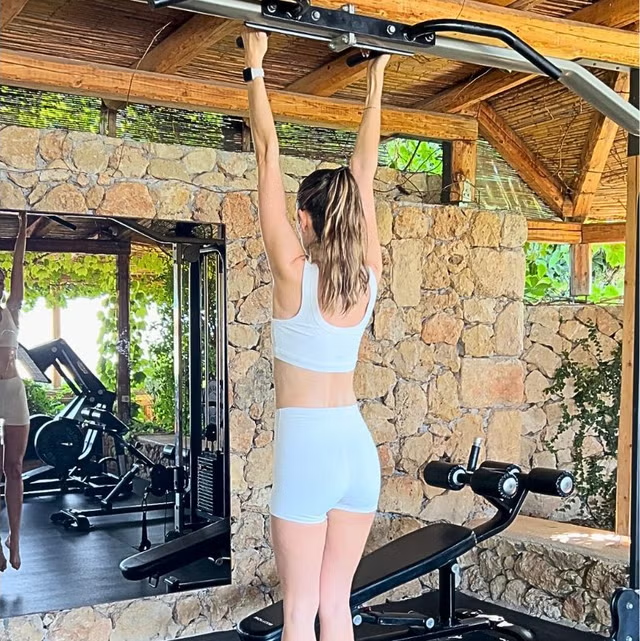
Hanging from a bar, often called a dead hang, is a simple yet powerful functional movement that offers significant benefits for your musculoskeletal health and longevity. It specifically addresses issues caused by modern sedentary lifestyles, such as spinal compression and restricted shoulder mobility.
Key Advantages for Health
Spinal Decompression: Gravity creates a natural traction that elongates the spine and increases the space between vertebrae. This helps rehydrate intervertebral discs, providing immediate relief from back tightness and potentially alleviating pain from conditions like sciatica or herniated discs.
Shoulder Health and Mobility: Modern life rarely requires overhead movements, leading to stiff shoulders. Hanging stretches the lats, chest, and shoulder ligaments, restoring full range of motion. It is often used as a rehabilitation tool to prevent shoulder impingement by creating more space in the joint.
Posture Correction: Hanging counteracts “tech neck” and rounded shoulders by stretching tight anterior muscles (like the pecs) and activating upper back stabilizers.
Core and Upper Body Stability: Even a “passive” hang requires deep core engagement and stabilizes the shoulder girdle, providing a foundation for more complex pulling movements like pull-ups.
Longevity and the “Grip Strength” Connection
The primary link between hanging and longevity is grip strength.
Mortality Predictor: Research consistently shows that grip strength is a highly reliable marker of biological age and overall physical resilience. Lower grip strength is associated with higher risks of cardiovascular disease, respiratory illness, and all-cause mortality.
Sarcopenia Prevention: Maintaining grip strength through hanging helps combat sarcopenia (age-related muscle loss), which is a major factor in frailty and loss of independence as people age.
Cognitive Health: Some studies have identified a correlation between high grip strength and better cognitive function, including memory and processing speed.
Practical Tips for Getting Started
Start Gradually: If you cannot support your full weight, perform assisted hangs by keeping your feet on the ground or a box to control the load on your shoulders.
Passive Hang: Relax your shoulders and let them touch your ears. This is best for spinal decompression and stretching.
Active Hang: Pull your shoulder blades down and back (away from your ears) while engaging your core. This builds strength and stability in the rotator cuff.
Frequency and Duration: Aim for 10 to 30 seconds per hang initially. A common goal for overall health is to accumulate 2 minutes of hanging time throughout the day.
Mind Your Grip: Use an overhand grip (palms facing away) shoulder-width apart. Hook your fingers over the bar rather than clenching tightly to allow for better upper back extension.
Listen to Your Body: Avoid full passive hangs if you have a history of shoulder dislocations or hypermobility; focus on active hangs instead to maintain joint integrity.