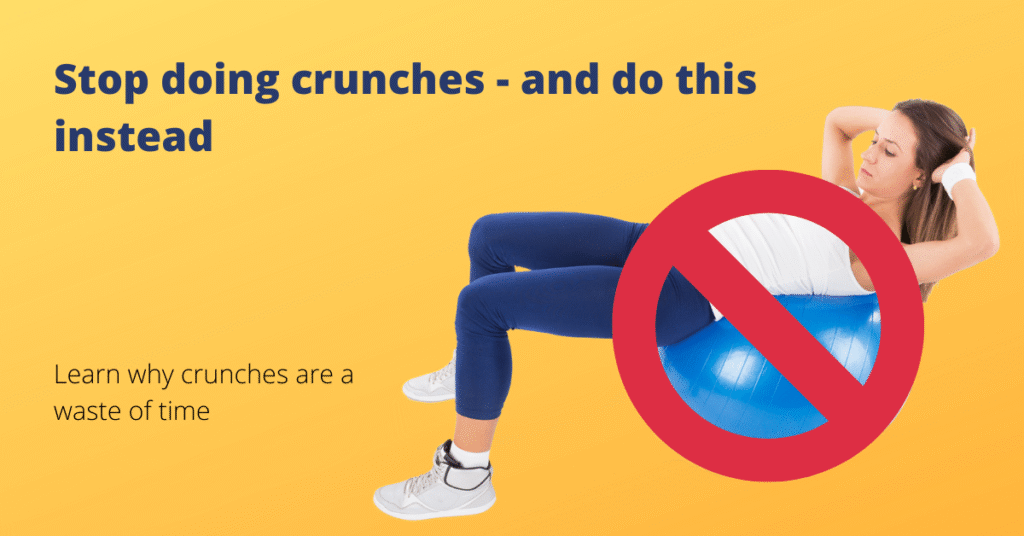
Are you overdoing on sit-ups and crunches? Many of us are and here’s what you need to know:
Doing too many crunches and sit-ups is considered detrimental to spine health and long-term physical longevity because they place excessive, repetitive, and unnatural pressure on the lumbar spine (lower back) and intervertebral discs. Research suggests that high-volume flexion—repeatedly bending the spine forward—compresses the discs, which can lead to herniation, degeneration, and chronic pain, effectively acting as an “antiquated” exercise that damages the spine’s structural integrity over time.
Let’s examine why excessive crunches and sit-ups can be harmful to your spine and longevity:
1. High Compression and Shear Forces on the Spine
- Excessive Load: Traditional sit-ups and crunches generate over 3,300 newtons of compressive force on the lumbar spine, a limit deemed unsafe by occupational safety standards.
- Disc Damage: Repeated flexion (bending forward) forces the gel-like nucleus of the intervertebral discs to push backward against the annular fibers, leading to disc protrusion, bulging, or herniation.
- “Jelly Donut” Effect: Imagine a jelly donut: if you squeeze one side, the filling shoots out the other. Repetitive, high-force crunching acts the same way on your spinal discs.
2. The “Shelf Life” of the Spine
- Limited Repetitions: Spinal discs have a limited “shelf life” for bending cycles before they begin to degenerate. Thousands of repetitive flexion cycles are required to cause disc herniation. Excessive, daily, or high-volume sit-ups accelerate this “age-related” deterioration.
- Irreversible Damage: This degeneration can lead to chronic instability in the lower back.
3. Contrary to Natural Function (Poor Bio-mechanics)
- Core vs. Movement: The abdominal muscles are designed primarily to stabilize the spine and resist movement, not to create excessive flexion, according to spinal bio-mechanics experts like Dr. Stuart McGill.
- Poor Posture Replication: Crunches often reinforce a slumped-forward posture, which is the opposite of a healthy, neutral spine position.
4. Negative Effects on Longevity and Muscular Balance
- Tight Hip Flexors: Sit-ups heavily engage the hip flexors (muscles at the front of the pelvis). When overworked, these become tight and pull on the lower spine, causing anterior pelvic tilt and lower back pain.
- Neglects Other Core Muscles: Crunches only target the superficial “six-pack” muscle (rectus abdominis), failing to strengthen the deeper muscles (transversus abdominis and obliques) needed for true stability.
- Injury Risk: Due to the strain, sit-ups have been linked to over 50% of self-reported injuries in some fitness tests, prompting the U.S. Army to remove them from training in favor of safer alternatives.
How to Protect Your Spine:
Instead of high-volume crunches, experts recommend focusing on isometric exercises that maintain a neutral spine, such as planks, side planks, and the “dead bug” exercise.