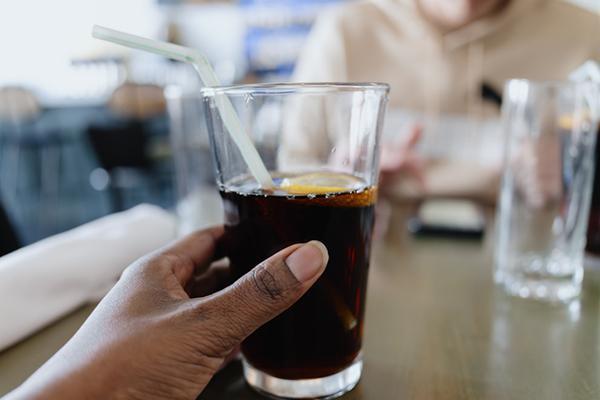
Regular and diet soft drinks act as quiet accelerators of skeletal aging, directly undermining your healthspan and longevity. True longevity is not just about lifespan (how long you live); it is deeply dependent on your healthspan—the period of life spent free from chronic, debilitating disease.
Because bone density losses accumulate silently over decades, routine soda consumption can lead to osteoporosis, premature frailty, and an elevated risk of life-altering fractures in older age. From a longevity perspective, a hip fracture is a catastrophic healthspan event, often leading to a permanent loss of independence and a severely increased risk of mortality.
Regular Soft Drinks: Advanced Glycation & Metabolic Bone Loss
Regular sodas damage the skeleton primarily through massive glucose spikes and high-fructose corn syrup content:
- Advanced Glycation End-Products (AGEs): Chronic high blood sugar causes sugar molecules to bond with proteins in the bone matrix (like collagen) without an enzyme. This process creates AGEs, which stiffen and weaken the structural collagen framework of your bones, making them brittle and highly prone to snapping, regardless of your bone density scores.
- The Inflammatory Osteoclast Cascade: Spiking blood sugar triggers systemic inflammation. This inflammation activates osteoclasts—the cells responsible for breaking down bone tissue—while suppressing osteoblasts, the cells that build new bone.
- Magnesium and Calcium Wasting: Processing large amounts of refined sugar forces the kidneys to excrete vital minerals like calcium and magnesium, stripping the bloodstream of the building blocks required for skeletal maintenance.
Diet Soft Drinks: Artificial Sweeteners & Gut Dysbiosis
Swapping to diet sodas does not protect your skeleton. While they lack sugar, diet sodas introduce chemical alternatives that disrupt bone metabolism through different pathways:
- Gut Microbiome Disruption: Artificial sweeteners (such as aspartame, sucralose, and saccharin) have been shown to alter the composition of your gut microbiota. A healthy, balanced gut microbiome is vital for synthesizing vitamins and absorbing bone-critical minerals like calcium and magnesium. Gut dysbiosis directly impairs this absorption efficiency.
- The Chronic Low-Grade Inflammation Loop: An altered gut barrier can leak bacterial byproducts into the bloodstream, triggering systemic, low-grade inflammation. In longevity science, this is known as “inflammaging”—a state that continuously accelerates bone resorption (the breakdown of bone) over time.
Shared Skeletal Threats: Phosphorus & Caffeine
Both regular and diet sodas contain two common ingredients that actively degrade skeletal integrity:
- Phosphoric Acid Overload: Many sodas (particularly dark colas) are heavily loaded with phosphoric acid to give them their sharp, tangy flavor. Excess phosphorus binds with calcium in the digestive tract, preventing it from being absorbed. Furthermore, if blood phosphorus levels get too high relative to calcium, your body secretes parathyroid hormone (PTH), which actively pulls calcium out of your bones to normalize blood ratios.
- Caffeine-Induced Calcium Excretion: Caffeine acts as a mild diuretic, causing your kidneys to flush out calcium before your body can utilize it. Combined with phosphoric acid, this creates a dual-action drain on your skeletal mineral reserves.
Active Longevity Action Plan
To maximize your healthspan and shield your skeleton from premature degradation, implement these tactical beverage swaps:
- Hydrate with Mineral-Rich Waters: Transition to sparkling mineral waters. Brands high in natural calcium and magnesium actually support bone remodeling rather than destroying it.
- Support Your Matrix with Green Tea: Swap your midday soda for green tea. Green tea contains epigallocatechin gallate (EGCG), a powerful antioxidant that promotes osteoblast (bone-building) activity and inhibits osteoclast (bone-breaking) activity.
- The 1-for-1 Transition Rule: If you cannot quit sodas cold turkey, commit to drinking 16 ounces of pure water immediately following any soda consumption to help your kidneys flush out excess acids and protect your body’s mineral balance.