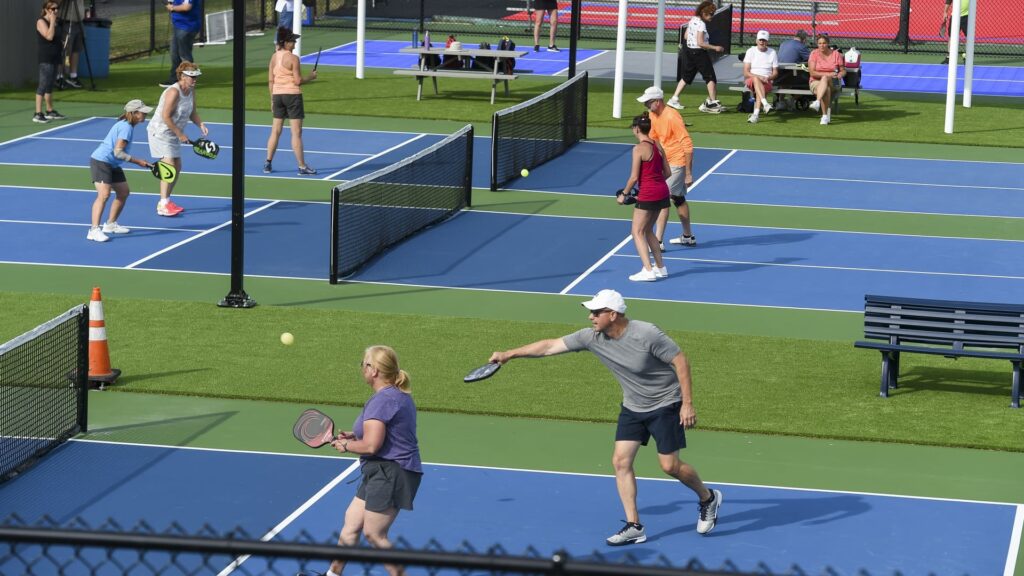
Pickleball is widely recognized as a “sport for a lifetime” that offers significant wellness and longevity benefits, particularly for older adults, by combining moderate-intensity cardio with social interaction. It is generally considered a low-impact alternative to tennis that promotes heart health, improves balance, and fosters community, although it carries risks of sprains, strains, and, in some cases, serious falls.
Pros (Health and Longevity Benefits)
- Improved Cardiovascular Health: Regular play elevates heart and breathing rates, placing players in the moderate-to-vigorous intensity zone for over 70% of play time. This boosts cardiorespiratory fitness, reduces blood pressure, lowers cholesterol, and can significantly decrease the risk of heart disease.
- Longevity and Reduced Mortality Risk: Studies indicate that racquet sports like pickleball can reduce the risk of death by nearly 50% compared to non-players.
- Low-Impact on Joints: The smaller court size means less running than tennis, making it easier on the knees, hips, and shoulders.
- Improved Balance and Fall Prevention: The quick, lateral movements and rapid changes in direction help strengthen core and lower-body muscles, improving agility and balance, which is crucial for preventing falls in seniors.
- Enhanced Cognitive Function: The fast-paced, strategic nature of the game engages the brain, with studies showing it can boost cognitive function, memory, and reaction times, potentially helping to stave off dementia.
- Mental Well-being and Socialization: As a highly social sport, it combats loneliness and reduces stress, depression, and anxiety.
- High Caloric Burn: Players can burn 40% more calories in 30 minutes than walking, aiding in weight management.
Cons (Risks and Drawbacks)
- Acute Injuries (Falls and Sprains): Rapid, unexpected movements on hard courts can lead to ankle sprains, knee ligament tears, and strains. An 11-fold increase in senior injuries was reported, with 92% of broken bones resulting from falls.
- Overuse Injuries: Due to the repetitive, fast-paced nature of the game, players often develop tendonitis in the elbow (“pickleball elbow”), shoulder injuries (rotator cuff), or Achilles tendonitis.
- Cardiovascular Overexertion: The competitive, high-intensity, and often “addictive” nature of the game can lead some players, particularly those who were previously sedentary, to overexert themselves.
- Eye Injuries: Being struck by the hard plastic ball can cause eye injuries, such as retinal damage.
Based on research into longevity and fitness, while pickleball offers significant health benefits, certain other activities may offer superior long-term results for comprehensive physical conditioning and lifespan extension. The best alternatives for, or complements to, pickleball for longevity and fitness include tennis, swimming, cycling, and resistance training.