Ageless Warriors: Martial Arts for Lifelong Vitality

ma

Taking up a martial art for longevity is about more than just staying “fit”—it’s about building a body and mind that are resilient to the specific declines of aging. Martial arts offer a holistic approach to longevity by integrating physical conditioning with mental focus and stress management. Research indicates that consistent practice can improve cardiovascular health, enhance cognitive function, and significantly reduce the risk of falls in older adults. 

Let’s look at why it is uniquely valuable compared to standard gym workouts:

1. The “Anti-Fragility” Factor

Unlike linear exercises (like a treadmill), martial arts require movement in 360 degrees.

  • Proprioception: You develop a deep “body map,” knowing exactly where your limbs are in space. This is the single best defense against falls—the leading cause of injury-related death in older adults.
  • Bone Density: The controlled impact of striking or the weight-bearing nature of grappling stimulates osteoblasts, keeping bones dense and resistant to osteoporosis.

2. Cognitive Reserve (Brain Health)

Martial arts are “moving puzzles.” Learning complex “Katas” (forms) or reacting to a sparring partner’s movements forces the brain to create new neural pathways.

  • Neuroplasticity: This constant learning helps delay cognitive decline and memory loss.
  • Stress Modulation: The focus required to perform techniques acts as an active meditation, lowering cortisol levels and protecting the heart from chronic stress.

3. Functional Independence

Longevity isn’t just living longer; it’s staying capable.

  • Grip Strength: Arts like Brazilian Jiu-Jitsu or Judo build incredible grip strength, which is a clinically proven biomarker for heart health and overall mortality risk.
  • Core Stability: Every martial art originates from the core, protecting your spine and maintaining the ability to perform daily tasks (like getting up off the floor) well into your 80s.

4. The Social “Blue Zone” Effect

Data from “Blue Zones” (where people live the longest) shows that community is vital. Martial arts dojos provide a “third space” outside of work and home.  

Some of the Best Martials Arts for Longevity Include:

1. Tai Chi (The “Ultimate” Health Art)

Often called “meditation in motion,” Tai Chi is a top recommendation for longevity due to its low impact and focus on internal energy. 

  • Balance and Fall Prevention: Excellent evidence shows it improves static and dynamic balance, reducing fall risks in seniors by up to 50%.
  • Cognitive Longevity: Studies suggest it can slow the progression from mild cognitive impairment to dementia more effectively than standard exercise.
  • Chronic Condition Management: It is a conditionally recommended practice by the American College of Rheumatology for managing osteoarthritis pain in the knee, hip, and hand. 

2. Brazilian Jiu-Jitsu (The “Human Chess”)

Known as the “gentle art,” BJJ focuses on grappling and leverage rather than striking, making it highly adaptable for various fitness levels. 

  • Functional Strength: Builds core stability and muscular endurance through technical ground-based maneuvers.
  • Mental Well-being: The intensive problem-solving required during sparring acts as a “brain workout,” helping to maintain mental acuity and reduce stress.
  • Low Impact Longevity: Because it lacks the high-impact collisions of striking arts, it is often safer for long-term joint health in older practitioners. 

3. Wing Chun (Practical Efficiency) 

This form of Kung Fu emphasizes close-quarters technique and economy of motion, making it ideal for those seeking longevity without excessive physical strain. 

  • Joint Health: Uses open-hand techniques and low kicks, which are easier on the joints than the high-impact kicks found in Muay Thai or Taekwondo.
  • Reflexes and Agility: Develops “sticky hands” sensitivity, which keeps the nervous system sharp and improves reaction times as one ages.
  • Posture: Focuses on structural alignment to generate power, which helps counteract age-related postural decline. 

4. Muay Thai and Karate (Cardiovascular Power)

For those seeking more vigorous wellness benefits, these striking arts provide high-intensity conditioning. 

  • Heart Health: Muay Thai is a “calorie burner” that significantly lowers blood pressure and strengthens cardiovascular endurance.
  • Bone Density: The impact of striking pads and heavy bags has been shown to increase bone mineral density, a critical factor in preventing osteoporosis.
  • Adaptability: Karate is highly adaptable, with many practitioners continuing into their 70s and 80s to maintain mobility and speed. 

Naps Can Be Good

nap

Taking a well-timed, short nap can significantly enhance your immediate health, mood, and cognitive performance. However, frequent or long-duration napping may be a “red flag” for underlying health issues or contribute to long-term risks like heart disease and diabetes. 

Scientific evidence suggests that short, regular afternoon naps—typically 20 to 30 minutes—can support longevity by mitigating stress, boosting cardiovascular health, and improving cognitive function. Studies indicate that such naps reduce the accumulation of adenosine and cortisol (the “stress hormone”), which decreases cardiovascular pressure and inflammation that contribute to age-related disease. Furthermore, napping 1–2 times per week has been associated with a significantly lower risk of cardiovascular events, such as heart attacks and strokes, compared to never napping. For older adults, habitual, brief, early-afternoon napping is correlated with better memory, cognitive flexibility, and higher levels of successful aging, especially among those who maintain a total daily sleep duration of roughly 8.5 hours.

Health and Longevity Benefits

A brief afternoon snooze provides several restorative effects:

  • Heart Health: Short naps (even 10–20 minutes) can lower blood pressure and reduce physiological stress. Studies show people who take 1–2 naps per week have a 48% lower risk of cardiovascular events.
  • Cognitive Boost: Napping improves memory consolidation, alertness, and reaction time. NASA found that a 26-minute nap improved pilot alertness by 54%.
  • Successful Aging: In older adults, midday napping is associated with a 6.7% higher “Successful Aging Index” score, particularly in those over 80.
  • Immune Support: Naps can help normalize inflammatory markers (like interleukin-6) that rise during sleep deprivation, essentially “flushing” the system. 

Napping Do’s and Don’ts

To maximize the benefits and avoid disrupting your natural sleep-wake cycle:

What to Do (Do’s)

  • Keep it Short: Aim for 15–30 minutes (the “power nap”). This prevents you from entering deep sleep, which causes grogginess upon waking.
  • Time it Right: Nap between 1 p.m. and 3 p.m. This coincides with the body’s natural “post-lunch dip” in alertness.
  • Create the Right Environment: Choose a quiet, dark, and cool space. Use eye masks or earplugs if needed to limit distractions.
  • Set an Alarm: This ensures you don’t oversleep and end up feeling worse than before. 

What Not to Do (Don’ts)

  • Don’t Nap Late: Avoid napping after 3 p.m. or 4 p.m., as it can seriously interfere with your ability to fall asleep at your regular bedtime.
  • Don’t Rely on Naps: Naps are not a substitute for a good night’s rest. Most adults need 7–9 hours of continuous nocturnal sleep.
  • Don’t Ignore Persistent Sleepiness: If you must nap every day just to function, it may be a sign of a sleep disorder like sleep apnea or an underlying medical condition like depression. 

Are You Getting Enough Sleep to Maximize Your Longevity?

sleepclock

Sleep is crucial for your longevity because it allows your body to perform vital repair, regeneration, and hormonal regulation, reducing risks for chronic diseases like heart disease, diabetes, and cancer, while improving brain function; consistent, quality rest strengthens immunity, balances metabolism, and repairs cells, making it a powerful factor in increasing lifespan and healthspan. 

Cellular & Physical Repair

  • Tissue Regeneration: During deep sleep, your body repairs muscles, grows tissues, and synthesizes proteins, essential for daily wear-and-tear recovery.
  • Immune Support: Sleep strengthens your immune system, helping you fight off infections and reducing inflammation, a key factor in aging. 

Hormonal Balance

  • Metabolism & Appetite: Sleep regulates hormones controlling metabolism and appetite, helping maintain a healthy weight and preventing issues like insulin resistance (Type 2 Diabetes).
  • Stress Response: Adequate rest helps manage stress hormones, improving mood and reducing anxiety and depression. 

Brain Health

  • Cognitive Function: Sleep allows the brain to clear out toxic byproducts and consolidate memories, improving focus and reducing dementia risk. 

Disease Prevention & Longevity

  • Reduced Chronic Disease Risk: Poor sleep is linked to heart disease, stroke, obesity, diabetes, and certain cancers, all of which shorten life.
  • Mortality Risk: Studies show a clear link between poor sleep habits (irregularity, short duration) and increased risk of early death from all causes, with some research suggesting sleep regularity is a stronger predictor than duration alone. 

Key Takeaway: Quality & Consistency Matter 

  • Aim for 7-9 hours, but focus on high-quality, consistent sleep—going to bed and waking up at the same time daily significantly boosts long-term health and survival. 

Ankle Power: The Secret to Staying Strong & Mobile for Life

anklebosu

——————————-

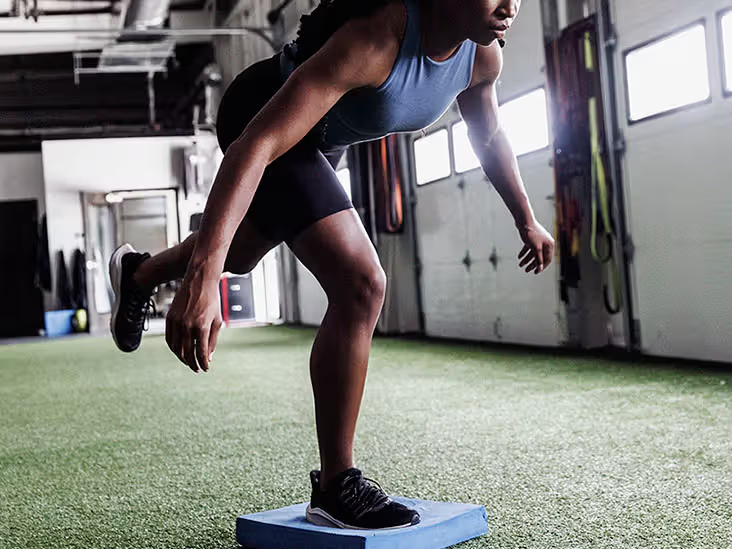
How strong are your ankles? Strengthening your ankles as you age is crucial for preventing falls, maintaining balance, and avoiding injuries, as aging naturally reduces joint fluid, cartilage, and muscle mass, leading to stiffness and instability. Strong ankles improve proprioception (your sense of body position), support proper biomechanics in your knees and hips, and absorb impact, reducing strain on your whole lower body, which keeps you mobile and active. 

To strengthen ankles with a BOSU ball, focus on balance drills like single-leg stands (holding a wall if needed), dynamic movements such as step-downs and 3-way leg extensions (forward, side, back), and calf raises on the unstable surface to build stability, control, and strength for injury prevention. 

Basic Balance & Stability

  1. Single-Leg Balance: Stand on the flat or dome side of the BOSU. Lift one foot, keeping a slight bend in your standing knee. Hold for 30-60 seconds, or 12 seconds and repeat 5 times. Use a wall for support if needed.
  2. Heel Raises: Stand with feet hip-width apart on the BOSU (dome up). Slowly rise onto your toes, lift your heels, and slowly lower, engaging your calves and stabilizing your ankles. 

Dynamic Strengthening

  1. 3-Way Leg Stability: Center one foot on the BOSU dome. Move the free leg forward, then to the side, then back, returning to center each time. This builds stability through movement.
  2. Step-Downs: Stand on the BOSU with one foot on the dome. Slowly lower your free foot to the floor, then push back up, focusing on ankle control and dorsiflexion (bringing toes to shin).
  3. Ankle Rotations (on dome): Stand on one leg on the dome. Lift your free foot and rotate your ankle, pointing toes out and in, and making circles, feeling the muscles on the side of your ankle work. 

Tips for Success

  • Start Stable: Begin with the flat side up if the dome is too challenging.
  • Use Support: Hold onto a wall or stable object until you feel confident.
  • Control is Key: Focus on slow, controlled movements rather than speed.
  • Frequency: Aim for daily practice to see improvements. 

Meditation and Longevity

med

Meditation acts as a powerful intervention for stress by physically reshaping the brain and lowering biological markers of tension. Beyond immediate relaxation, it promotes longevity by protecting cellular health and delaying age-related cognitive decline

Reducing Stress: The Biological Shift

Meditation reduces stress by moving the body from a “fight-or-flight” state to a “rest-and-digest” state. 

  • Cortisol Reduction: Regular practice significantly lowers cortisol, the primary stress hormone. Deep diaphragmatic breathing can reduce cortisol levels by approximately 30% in just a few minutes.
  • Amygdala Shrinkage: The amygdala, the brain’s “fear center,” actually shrinks in size and becomes less reactive with consistent meditation, leading to a calmer response to daily challenges.
  • Parasympathetic Activation: Techniques like Transcendental Meditation or guided imagery activate the parasympathetic nervous system, which lowers resting heart rate and blood pressure. 

Wellness and Emotional Resilience

Meditation enhances overall wellness by improving mental clarity and emotional stability. 

  • Emotional Regulation: It strengthens the prefrontal cortex, the area responsible for self-control and decision-making, helping individuals respond to stressors rather than reacting impulsively.
  • Pain Management: Mindfulness changes how the brain processes pain, often reducing the perceived intensity and emotional distress of chronic conditions.
  • Improved Sleep: By quieting “racing thoughts,” meditation helps people fall asleep faster and improves overall sleep quality, which is critical for long-term health. 

Longevity: Protecting Your Cells

Recent research highlights how meditation may impact biological aging at the cellular level. 

  • Telomere Protection: Telomeres are protective caps on chromosomes that shorten as we age. Chronic stress accelerates this shortening. Meditation has been shown to increase telomerase activity, the enzyme that repairs and maintains these caps.
  • Cognitive Preservation: Long-term meditators often have thicker gray matter in brain regions linked to memory and attention. One study found that 40–50 year old meditators had cortical thickness similar to non-meditators in their 20s.
  • Reduced Inflammation: Meditation lowers markers of systemic inflammation, such as C-reactive protein (CRP), which helps reduce the risk of age-related diseases like heart disease and diabetes. 

Meditation is often depicted as sitting in a rigid Lotus pose, but in reality, the “best” position is simply the one that allows you to remain comfortable, alert, and focused. For many, forced postures like Lotus can cause pain in the hips, knees, or back, which actually distracts from the practice. 

Alternative Meditation Postures

If sitting cross-legged doesn’t work for you, try these more accessible options:

  • Sitting in a Chair: Sit at the edge of a chair with your feet flat on the ground and your spine straight but not stiff. This is often the easiest position for beginners.
  • Kneeling (Seiza): Kneel with your shins flat on the floor and your buttocks resting on your heels. Using a cushion or a seiza bench can help reduce pressure on your knees.
  • Lying Down (Corpse Pose): Lie flat on your back with your arms by your sides. This is excellent for relaxation but carries the risk of falling asleep—try propping your head up if you feel too drowsy.
  • Standing: If you find yourself nodding off while sitting, try standing with your feet hip-width apart and knees slightly bent. This increases alertness and is common in practices like Tai Chi. 

Moving and “Informal” Meditation

You don’t even have to stay still to meditate. Any activity done with a single point of focus can be a form of meditation. 

  • Walking Meditation: Focus on the physical sensation of your feet hitting the ground (lifting, moving, placing) and the rhythm of your breath.
  • Daily Chores: Activities like washing dishes, gardening, or cooking can become meditative if you focus entirely on the warmth of the water, the texture of the soil, or the smells of the food.
  • Mindful Eating: Savor every bite by paying attention to the textures, flavors, and smells of your meal without distractions like phones or TV. 

Pro Tips for Beginners

  1. Prioritize Comfort: If you feel pain, your mind will focus on that rather than the meditation. Use props like pillows, blocks, or blankets to support your body.
  2. Focus on the Spine: Regardless of your pose, aim for a straight, natural spine to facilitate free breathing and blood circulation.
  3. Use “Anchors”: When your mind wanders (and it will), gently bring it back to an “anchor” like your breath, the sensation of your feet, or a specific sound.
  4. Keep it Short: Start with just 5 to 10 minutes daily. Consistency is more important than duration when first starting out.
  5. Ditch the Judgement: There is no “perfect” way to meditate. If your mind wanders 100 times, simply bring it back 100 times without getting frustrated.