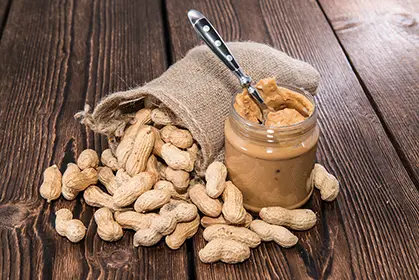
Whole peanuts are superior to peanut butter for wellness and longevity because their intact cellular structure alters how your body processes their calories, shields your gut microbiome, and better preserves cellular health. While both options deliver plant-based protein and vitamins, multiple prospective health studies—including large-scale epidemiological data analyzed by researchers—consistently link whole nut and peanut consumption to a reduced risk of all-cause mortality, while finding no such longevity association for peanut butter.
The Intact Cellular Structure
The primary differentiator in longevity outcomes is the physical form of the food:
- The “Prebiotic Trap”: No matter how thoroughly you chew a whole peanut, microscopic bits of its rigid plant cell walls remain fully intact. This traps a portion of the peanut’s healthy fats and nutrients, carrying them safely past the small intestine into the colon. Once there, these particles serve as a highly effective prebiotic bounty that feeds friendly gut flora, supporting a robust microbiome.
- The Nut Butter Bypass: Grinding peanuts into a smooth paste entirely obliterates this cellular matrix. The nutrients and oils are completely exposed and quickly absorbed in the upper digestive tract, bypassing the colon and stripping the gut microbiome of these slow-release prebiotic benefits.
Cellular Aging and Telomere Preservation
Recent clinical research directly contrasts how these two forms affect cellular aging. A notable 2025 randomized controlled trial published on PubMed Central (PMC) investigated the effects of peanut consumption on telomere length—the protective caps on our chromosomes that naturally shorten as we age.
- Whole Peanuts: Participants consuming skin-roasted peanuts daily over six months showed significant maintenance of telomere length.
- Peanut Butter: Participants eating peanut butter showed no significant benefit in telomere preservation compared to the control group. The mechanical processing and structural disruption appear to change how the food interacts with our cellular aging pathways.
Caloric Bioavailability and Weight Management
From a wellness and metabolic perspective, whole peanuts naturally regulate energy intake better than processed spreads:
- Incomplete Absorption: Because the cellular walls of whole peanuts are not completely broken down, your body does not absorb all of their calories. A portion passes through unabsorbed. Conversely, the calories in peanut butter are 100% bioavailable, making it much more energy-dense and easier to overconsume.
- Satiety Signalling: Whole peanuts require active mastication (chewing). This physical act, combined with the slower digestive transit of whole particles, triggers more robust fullness signals and suppresses hunger longer than a smooth, rapidly swallowed spread.
The Ultra-Processing and Additive Trap
Even though “100% natural” nut butters exist, the mass-market reality undermines the potential health benefits of the food:
- Undesirable Additives: Rough estimates indicate that up to 80% of commercial peanut butters contain ultra-processed ingredients. Manufacturers frequently add refined sugars, excess sodium, and emulsifiers like hydrogenated or palm oils.
- Counteracting Benefits: The systemic inflammation and cardiovascular strain triggered by trans-fatty acids and added sugars can actively neutralize the natural, heart-healthy endothelial benefits that plain peanuts provide.
- Loss of the Skin: Commercial peanut butter entirely discards the peanut skin. According to nutrition scientists at the Harvard T.H. Chan School of Public Health, keeping the skin intact is ideal because it houses the highest concentration of anti-inflammatory polyphenols and resveratrol.
If you want to optimize your snacks for a longer, healthier life, aim to consume raw or dry-roasted, skin-on whole peanuts at least three times a week rather than reaching for the jar.