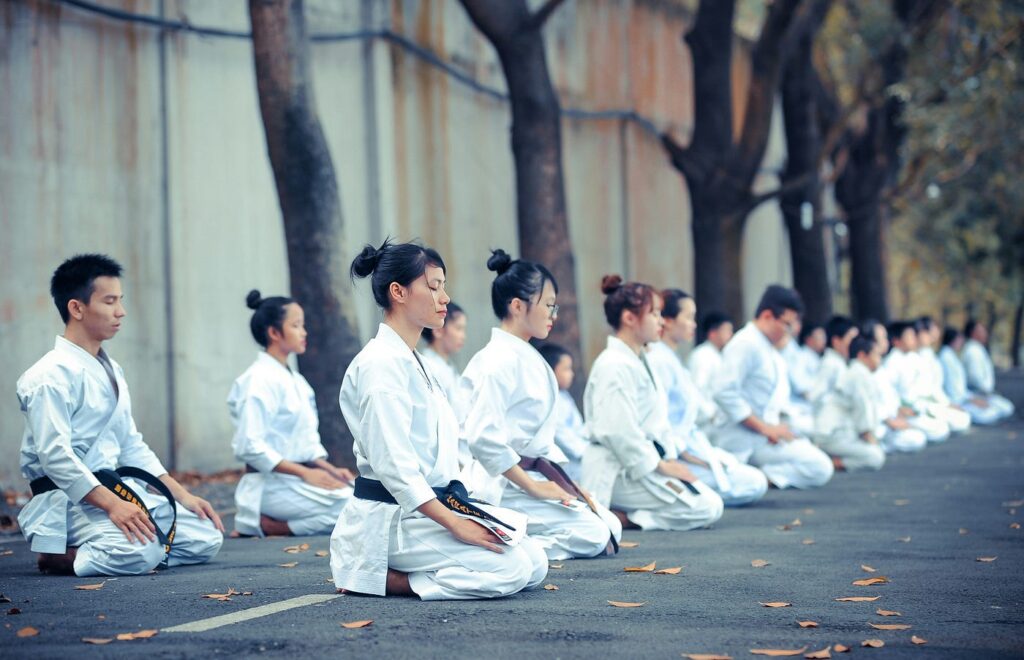
The traditional Japanese practice of seiza (正座), which translates to “correct sitting,” promotes longevity primarily by forcing the body into a state of active floor-sitting that builds core strength, preserves lower-body joint mobility, and prevents the age-related decline of the musculoskeletal system. In longevity hotspots like Okinawa, living closer to the floor acts as a form of natural, lifelong functional exercise.
Here is a breakdown of why this specific posture is heavily linked to a longer, healthier life.
1. Master Key to the “Sitting-Rising Test”
Medical studies consistently correlate the ability to sit down on the floor and rise back up without using hands or support with a significantly lower risk of all-cause mortality. Transitioning into and out of seiza forces you to utilize your “independent leg engine” and posterior chain. By getting up and down from the floor multiple times a day, Japanese elders organically maintain the leg strength, core stability, and balance required to prevent fatal falls in old age.
2. Automatic Posture Correction
Unlike sitting in modern, soft chairs—which encourages slouching and places immense pressure on the lumbar spine—proper seiza forces your pelvis into an alignment that makes it anatomically difficult to round your back.
- It naturally stacks your vertebrae.
- It engages the tanden (the lower abdominal core muscles) to keep you upright.
- It alleviates standard lower back stress caused by modern sedentary habits.
3. Preserves Extremity Range of Motion
As people age in Western societies, they rarely move their joints through their full geometric limits, causing the tendons to shorten and stiffen. Seiza requires deep knee flexion and ankle extension that trains ranges of motion most adults completely lose. By placing your weight over your heels with your toes flat, you actively stretch the shins, strengthen the ankles, and build knee tolerance.
4. Cardiovascular Resilience
While sitting in seiza temporarily restricts lower-body blood flow (the reason your legs “go numb”), moving out of the posture creates a rapid “reperfusion flush”. This cyclic narrowing and opening of the blood vessels acts like a gym workout for your vascular system, keeping blood vessels elastic and improving overall circulation over time.
How to Practice Seiza Safely
If you are not accustomed to it, seiza can feel incredibly intense or painful at first. It is vital to use proper alignment to protect your joints.
- The Alignment: Kneel on a soft surface like a yoga mat or a traditional tatami mat. Your big toes should lightly touch or overlap behind you, while your heels splay outward to form a “cup” for your sit bones to rest into. Keep your spine tall and shoulders relaxed.
- The Progression: Do not try to sit like this for an hour right away. Start with just 1 to 2 minutes a day.
- The Modifications: If your knees or ankles ache, place a yoga block, a rolled-up towel, or a dedicated seiza cushion between your calves and your thighs to alleviate the pressure.