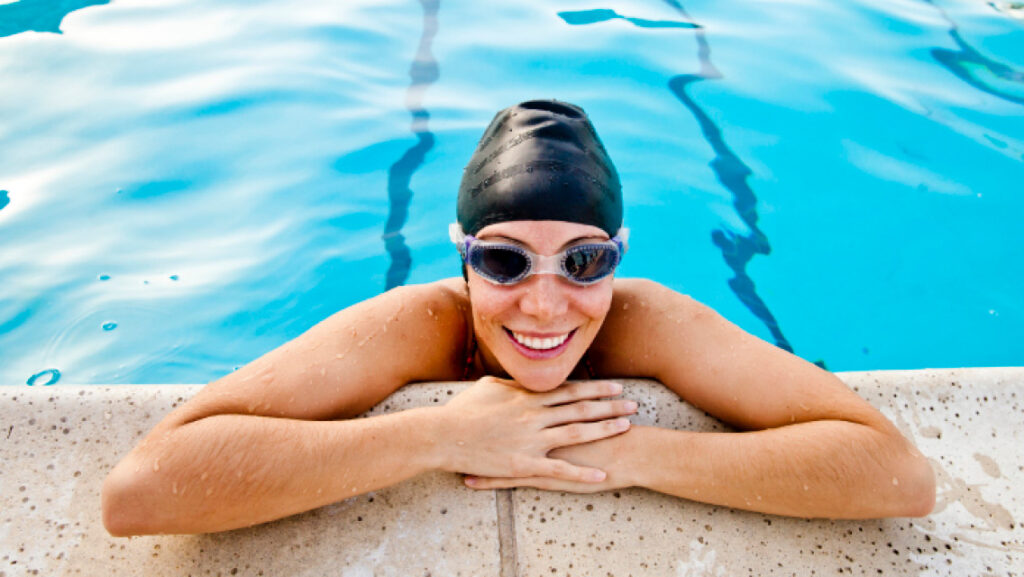
Swimming is widely considered the ultimate exercise for longevity because it delivers vigorous cardiovascular and musculoskeletal conditioning without imposing an “orthopedic debt”. A landmark study from the University of South Carolina tracked over 40,000 men for 32 years and discovered that regular swimmers had a 50% lower risk of dying from any cause compared to walkers and a 49% lower risk compared to runners.
Why Swimming Excels for Fitness and Longevity
- Zero-Impact Conditioning: Water’s buoyancy supports up to 90% of your body weight. This allows you to train your cardiovascular system at a high intensity without the joint wear-and-tear that causes arthritis or injuries in running.
- Full-Body Resistance: Water is roughly 800 times denser than air. Moving through it provides constant, uniform resistance that builds lean muscle mass across your upper body, core, and lower body simultaneously.
- Enhanced Respiratory Capacity: Controlled, timed breathing patterns in the pool strengthen your intercostal muscles and diaphragm. This significantly improves lung volume and overall cardiorespiratory efficiency.
- Neuroprotective Benefits: Swimming increases Brain-Derived Neurotrophic Factor (BDNF), which acts as a fertilizer for your brain. Research shows it promotes new brain cell growth, mitigates brain inflammation, and preserves cognitive flexibility as you age.
- Vascular Elasticity: The consistent aerobic demand of swimming has been proven to reduce arterial stiffness and lower blood pressure, directly preventing chronic cardiovascular disease.
The Ultimate Swimming Routine for Longevity
To maximize healthspan, a routine must target three separate physiological zones: Aerobic Base (Zone 2) for cellular health, Threshold for metabolic efficiency, and VO₂ Max for heart-lung power. To achieve the optimal 180 weekly minutes of cardio recommended for longevity, aim for 3 to 4 pool sessions per week.
Longevity Tip: Add Weight-Bearing Work
Because water completely supports your weight, swimming does not stimulate bone density growth. To prevent osteoporosis and age-related muscle loss (sarcopenia), you must pair your swimming routine with 1 to 2 days a week of land-based resistance training (such as lifting weights, bodyweight squats, or brisk walking).