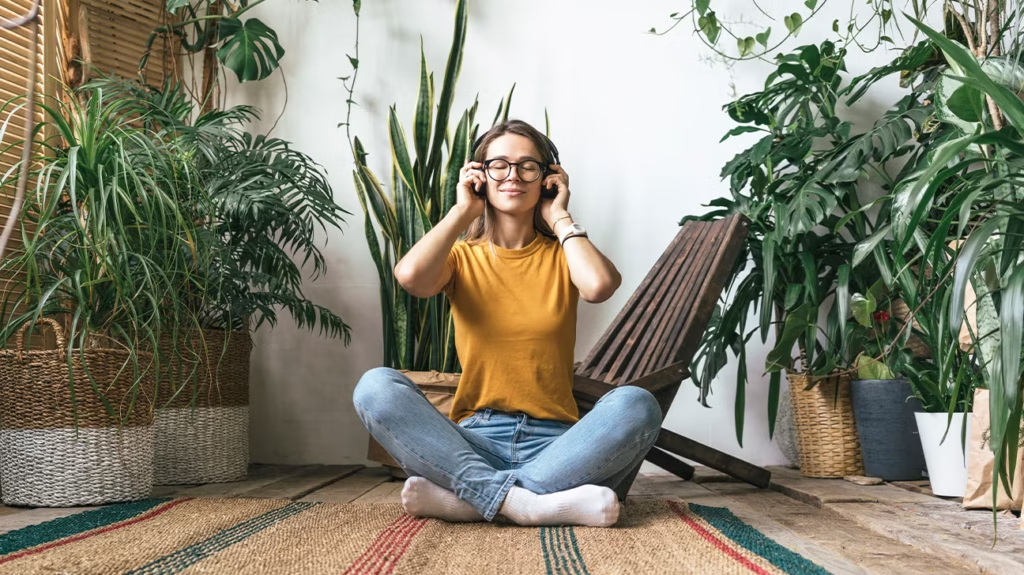
Spending more time on the floor improves mobility, strengthens core muscles, and predicts a longer life. Modern environments rely heavily on chairs and couches, which cause hip flexors to tighten and glute muscles to weaken. Shifting your daily activities to the floor forces your body to engage stabilizing muscles, improve joint range of motion, and maintain functional independence as you age.
Health, Fitness, and Longevity Benefits
- Longevity Predictor: Sitting and rising from the floor without using hands or knees is directly linked to lower mortality rates in older adults.
- Active Resting: Floor sitting requires continuous, low-level muscle activity to maintain posture compared to passive chair sitting.
- Hip Mobility: Positions like cross-legged or kneeling stretch tight hip joints, groin muscles, and the lower back.
- Core Strength: Staying upright without a chair back forces your abdominals and spinal erectors to engage constantly.
- Flexibility Variety: Shifting positions on the floor naturally opens up the ankles, knees, and pelvic floor.
- Balance & Coordination: The physical act of getting up and down improves vestibular health and spatial awareness.
Tips to Increase Floor Time
- Create a “Floor Zone”: Dedicate a rug or area in your living room with comfortable cushions, yoga mats, or bolsters.
- Use Low Furniture: Introduce coffee tables or Japanese-style low tables to encourage sitting on the ground during tasks.
- Dynamic Sitting: Change your leg positions every 10 to 15 minutes (e.g., transition from cross-legged, to side-sitting, to long-sitting).
- Stack Habits: Perform everyday habits on the floor, such as scrolling on your phone, reading, or watching television.
- Work from the Ground: Set up a laptop on a low stool or box and work while sitting or kneeling on a cushion.
- Play with Pets/Kids: Spend intentional playtime at their eye level on the ground to naturally build up your tolerance.